At some point, most of us learned to edit ourselves before entering a room.
Not all at once. Gradually, the way you stop noticing a hum until it disappears. You adjusted the accent a little. Packed a different lunch. Answered the question — that question, with a patience you were running low on, because patience had always been the safer currency.
It was not dishonesty. It was calculation. The quiet math of belonging: how much of yourself can you subtract and still feel like yourself?
I have done it. I still do it sometimes. I let people shorten my name without correcting them, or I offer the shorter version before they even ask. It is faster. It avoids the moment. It costs something small, every time.
The cost of overediting yourself is not dramatic. It rarely announces itself. It builds the way fatigue builds, not in one bad day but in the accumulation of a hundred small performances you did not audition for.
You laugh at the joke. You answer the follow-up question. You make yourself legible. And you are so good at it that after a while, even you have lost the thread back to the original.
The version that was always there.
What nobody says out loud: the original does not disappear.
It shows up in the language that comes out of you when you are tired, or angry, or deeply comfortable, the one that bypasses the edit entirely because it was there first. It is in the food you cook when no one is watching. The way you laugh differently with people who knew you before.
That version of you is not a rough draft. It was not something that needed correcting. The edit was never really about improvement.
First-generation experience teaches you that adaptation is a skill. And it is. Moving between worlds, code-switching, holding multiple selves — that is a form of intelligence that rarely gets named. But there is a difference between adapting and disappearing. Between translation and erasure.
Simplifying is not the same as giving up. It is the harder thing: returning to what was always there.
What it means to simplify.
We think about this at Flonatix, not just in the context of identity, but in the context of what we build.
Oily and combination skin is some of the most over-treated skin in the world. Stripped, corrected, loaded with products it never asked for, formulated for a different skin type entirely. The beauty industry decided certain skin types were problems to be solved. So people bought into the logic and kept adding layers.
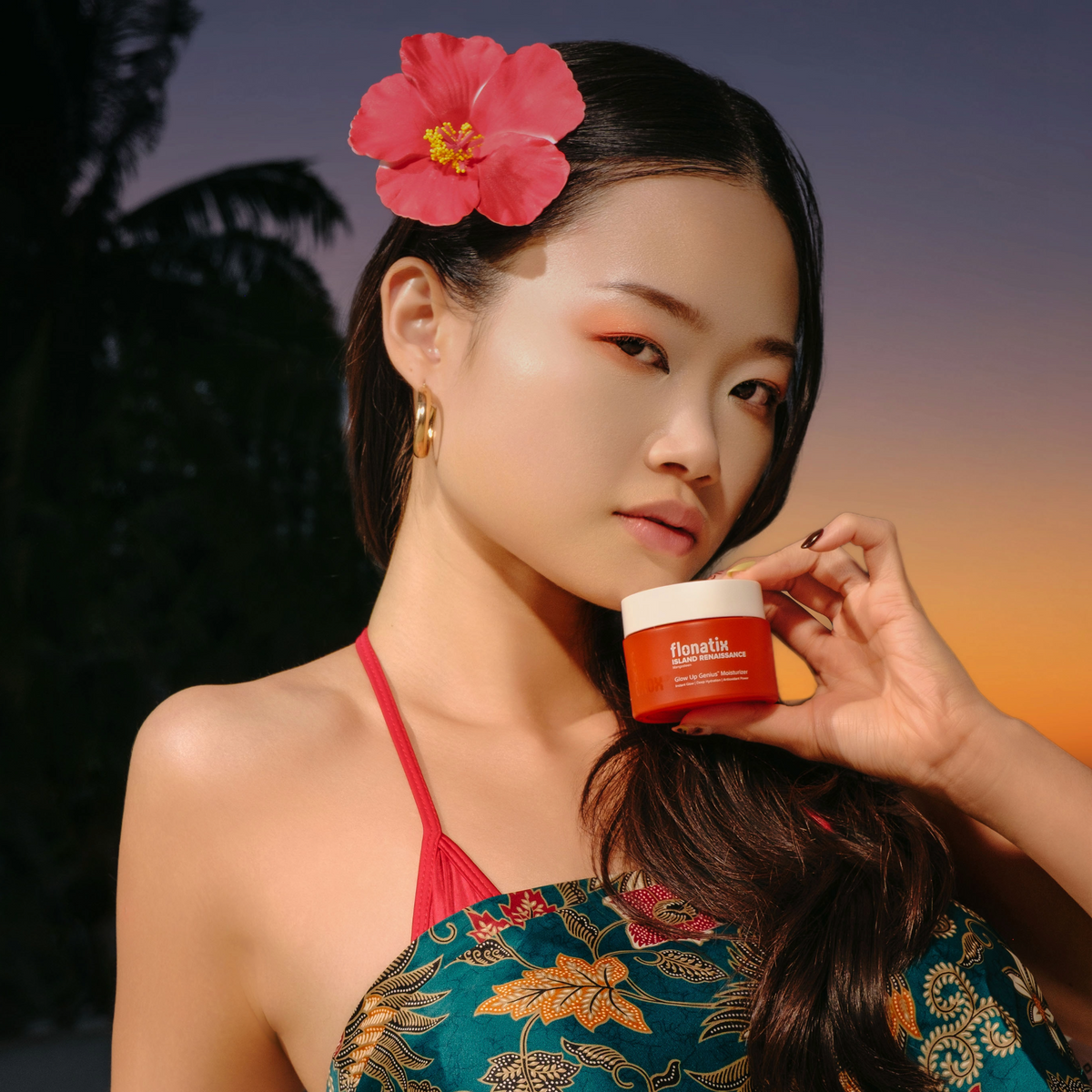
Glow Up Genius was built on a different premise. The best moisturizer for oily skin is not the heaviest one. It is the one that does what your skin actually needs: hydration, not occlusion. Sixteen ingredients. Nothing hidden. Lightweight by design, not by compromise.
Your skin type does not need to be fixed. It needs to be met. The same way you do not need to be fixed. You need to be seen.
The edit you stop making.
It does not happen in a single moment. It is quieter than that.
It is the first time you say your full name without offering a shorter version. The first time you bring the food anyway and let the conversation happen. The first time you sit with the discomfort of being fully yourself in a room that was not built for you, and realize the discomfort is the room's problem, not yours.
The cost of overediting yourself is real. But so is what comes back when you stop.
The version that has been waiting is not behind you. It has been with you the whole time.
-Written by Jay Hanggawan

Born and raised in Indonesia, Jay now lives in Washington, DC, and is interested in the spaces where culture, identity, and care intersect.